Preparing for a food-industry audit is not about tidying folders two days before the visit. It is about checking whether processes, documents, records and responsibilities tell the same story. A useful starting question is: can we support what we say with evidence from normal operations?
This guide is written for producers, processors, storage and distribution operations, bakeries, confectionery businesses, hospitality, catering and other food-chain organisations. It does not replace the specific audit criteria and is not legal advice or a certification audit.
01 · The principle
What does being audit-ready actually mean?
An organisation is better prepared when it can explain how the process works, who owns each stage and which evidence shows that controls have been carried out. An auditor does not review procedures in isolation. The documented system is compared with observed practice, team discussions and available records.
Start by clarifying the audit type, scope, criteria and assessment boundaries. An internal audit, a supplier audit and a certification-readiness assessment answer different questions.
02 · Practical checklist
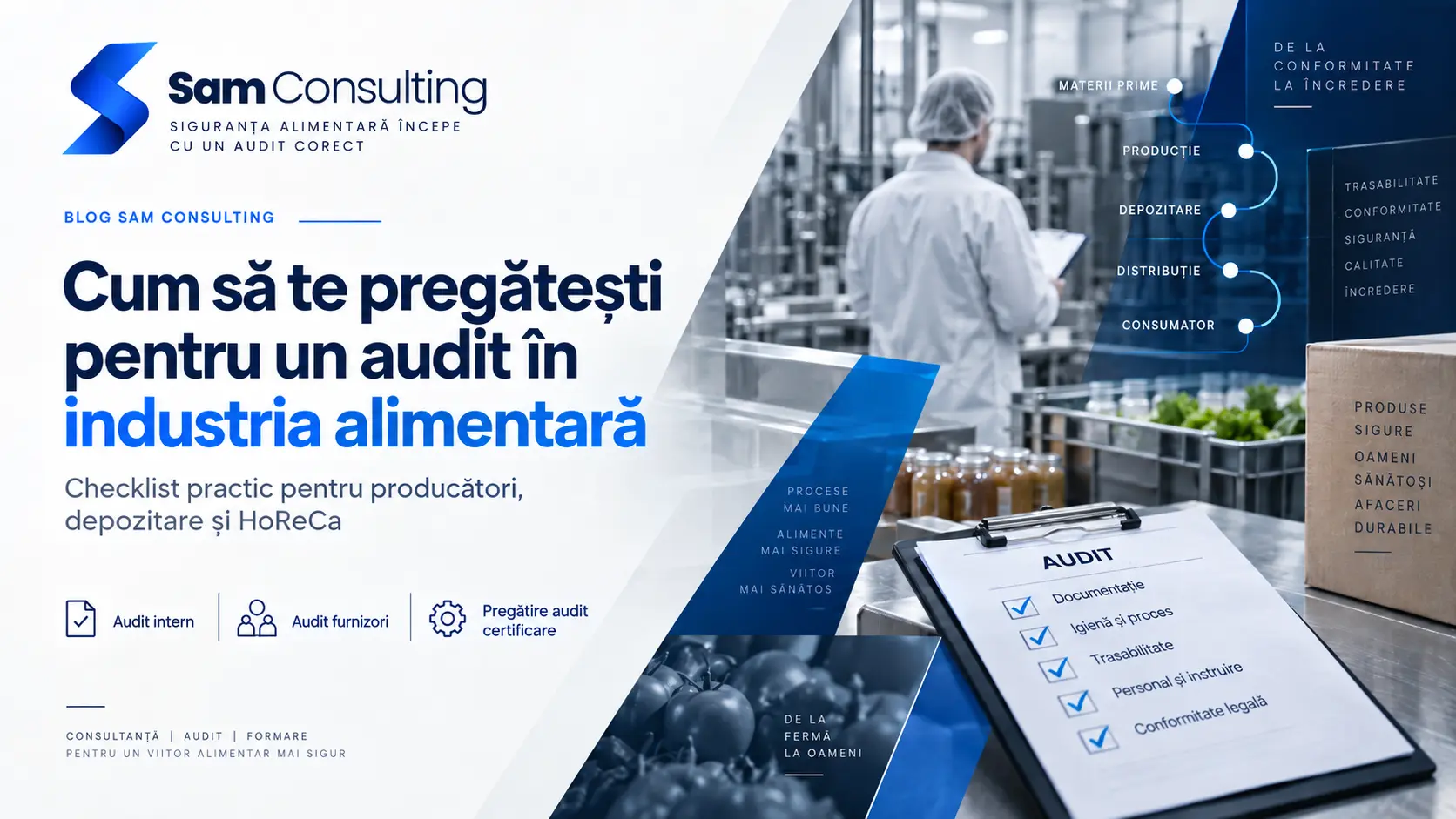
10 checks worth completing before the audit
- Confirm scope and criteria.Which standard, internal requirement, customer specification or contractual criterion will be used?
- Map the real process flow.Follow the product from receipt to dispatch and compare actual practice with the documented flow.
- Check the documents people actually use.Procedures should be current, accessible and aligned with operational practice.
- Sample the records.Select days, batches or activities and check that monitoring is complete, legible and coherent.
- Run a traceability test.Follow a real batch across raw materials, processing, finished product, stock and dispatch.
- Review hygiene and operating conditions.Look at actual practices, condition of areas, separation, responsibilities and verification evidence.
- Check training and competence.People should understand what they do, why it matters and which records they own.
- Review previous nonconformities.Confirm that closure is supported by evidence and that the issue has not simply reappeared.
- Check supplier information.Confirm approvals, specifications, changes and relevant evidence are controlled and current.
- Walk the operation one final time.Look for differences between what the system says and what an external assessor can see.
A simple test
Can you support the statement with evidence quickly?
If a check is described as daily, can the record be found without reconstructing the activity from memory? Speed is not the only measure, but clear access to evidence often indicates that the process is better controlled.
03 · Evidence and traceability
Traceability should be tested, not assumed
Use a real batch. Check receipt and raw-material identification, links to processing, relevant records, finished product, quantities, stock and dispatch information. The aim is to see whether normal operational data can reconstruct the product journey.
For food production and processing, batch links and changeovers may be central. For storage and distribution, identification, conditions, stock rotation and continuity of dispatch information may be more prominent.
04 · People and ownership
Prepare people to explain the process, not recite answers
People carrying out the work should be able to explain what they check, when they check it, what happens when a result is unacceptable and where the information is recorded. Understanding is more reliable than rehearsed answers.
05 · What to avoid
Common audit-preparation mistakes
Updating documents without checking practice
The procedure may be correct while the real process has moved in a different direction.
Reconstructing records retrospectively
Evidence should reflect actual work rather than being recreated for the audit visit.
Trying to hide a known issue
It is usually more useful to show that the issue is known, analysed and managed through a proportionate action plan.
Preparing one person to answer everything
A resilient system should not depend on one individual to explain every process.
24–48 hours before
The final review should be simple
- confirm the agenda, scope and relevant people;
- check access to relevant documents and records;
- walk the areas included in scope;
- review open findings and corrective actions;
- select a batch and confirm the traceability route;
- remind the team to answer clearly and factually rather than use rehearsed responses.
06 · Choosing the assessment
Which audit type supports your next step?
If you want to test your own system before an external assessment, an internal audit is a natural starting point. If the question concerns a supply-chain partner, consider a supplier audit. If a formal certification audit is approaching and you need a gap/readiness review, see certification audit readiness.
For the broader Sam Consulting approach, see the core food industry audit service.
Apply the guide in context
Preparation differs by operation
07 · FAQ
Frequently asked questions about audit preparation
How early should food audit preparation begin?
Preparation should start early enough for the team to test processes and evidence, rather than simply collecting documents in the final few days. The timing depends on audit scope, operational complexity and known findings.
Which documents should be ready for a food audit?
The exact set depends on the audit criteria. Typical evidence includes applicable procedures, operational records, traceability evidence, hygiene checks, training, monitoring, nonconformity handling and corrective actions.
Is up-to-date documentation enough?
No. A useful audit compares what is documented with what actually happens. Procedures, records, responsibilities and observed practice need to be coherent against the agreed criteria.
How should traceability be tested before an audit?
Run a traceability exercise using a real batch and follow the links between receipt, processing, finished product, stock and dispatch. The aim is to confirm that information can be followed consistently within the timeframe relevant to your context.
Does an audit readiness review guarantee certification?
No. A readiness review can identify gaps and priorities before the formal audit, but it cannot guarantee the outcome of certification or an official inspection.
Next step
Not sure what should be checked before your next audit?
We start by clarifying scope, criteria and operating context. From there, we can establish whether an independent audit is the right tool.
Talk to Mirela