
Operational context

The food industry is not a single process.

Risk, documentation and responsibility differ from one facility to another. Every assessment starts with the real operating context.

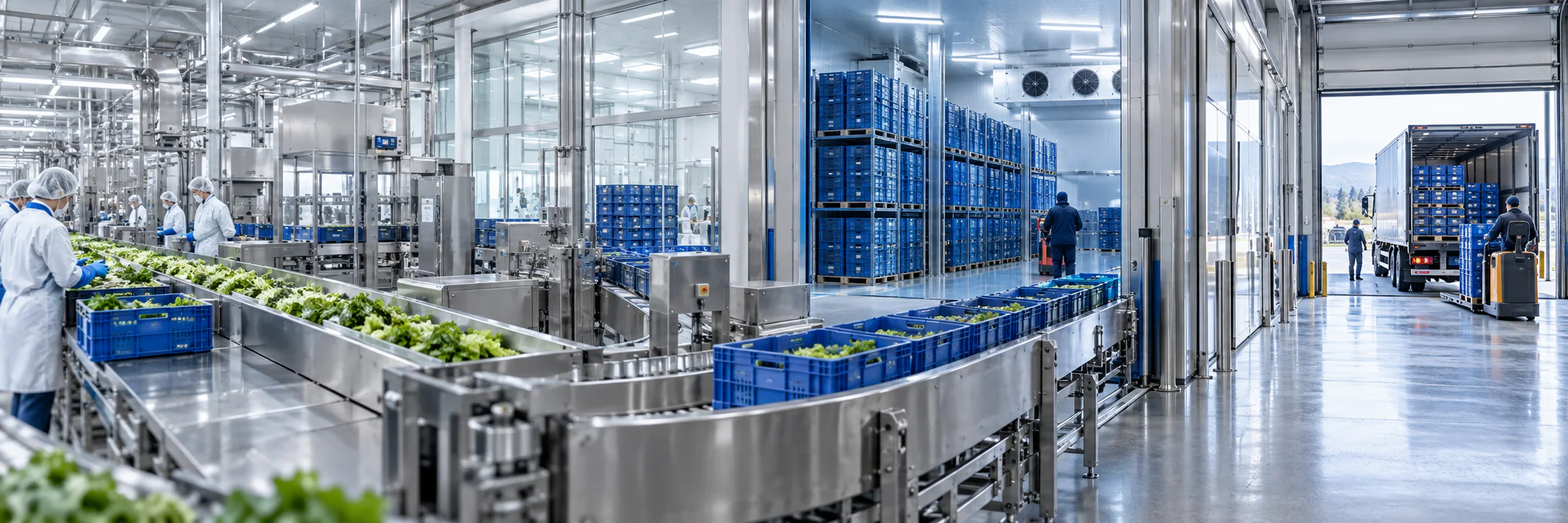
Integrated food production, storage and distribution flow
AI-generated illustrative image

Where an audit may be relevant

Each link in the chain has different handovers, evidence and responsibilities.

01

Food production and processing

Facilities where materials move through successive stages and control depends on coordination between people, equipment and records.

Areas to consider

  • material intake and identification
  • process flow and control points
  • hygiene, product changeovers and records

Starting questions

  • Which process or line needs review?
  • What change or incident triggered the discussion?
  • Which criteria does the business already use?

Scope definitionProcess complexity, line count and included products influence the assessment scope.

Explore the industry page
02

Food storage, distribution and logistics

Operations where storage conditions and information continuity must be maintained from intake to dispatch.

Areas to consider

  • intake and storage conditions
  • stock identification and rotation
  • information handed to customers or carriers

Starting questions

  • How many sites and flows are included?
  • Do products have different requirements?
  • Which records cover batches and conditions?

Scope definitionWe clarify whether the review covers warehousing, transport, records or a combination.

Explore the industry page
03

Retail, private-label and export suppliers

Businesses working to specific commercial requirements that need consistent processes and available evidence.

Areas to consider

  • customer or contractual requirements
  • traceability and change control
  • evidence preparation and availability

Starting questions

  • Who defined the assessment criteria?
  • Which products and sites are in scope?
  • Is there a relevant commercial deadline?

Scope definitionRetailer, customer or export-market requirements must be supplied and validated for the proposed assessment.

Explore the industry page
04

Catering and commercial kitchens

Fast-moving operations with concurrent activities and frequent handovers across intake, preparation, holding and service.

Areas to consider

  • stage separation and process layout
  • hygiene practices and responsibilities
  • records linked to daily operations

Starting questions

  • Is this one site or a network?
  • What production and service model is used?
  • Where does operating variation occur?

Scope definitionThe assessment adapts to kitchen type, volume and service model; it does not automatically include authorisation or certification.

Explore the industry page
05

Local producers, bakeries and confectionery

Businesses where production, storage and sales may share one site and responsibilities sit within a small team.

Areas to consider

  • materials, allergens and product identification
  • production and cleaning organisation
  • documentation proportionate to actual activity

Starting questions

  • Which products and volumes matter?
  • How is the team organised?
  • What needs clarifying first?

Scope definitionBefore quoting, we confirm whether the operation and stated need fall within Sam Consulting’s assessment scope.

Explore the industry page

Choosing the scope

The industry starts the conversation; it is not the whole diagnosis.

  1. 01

    Activity — what the business produces, handles, stores or delivers.

  2. 02

    Complexity — sites, flows, products, people and partners involved.

  3. 03

    Trigger — a change, internal question, customer requirement or need to verify.

  4. 04

    Criteria — the concrete basis used to assess the evidence.

This list describes contexts where an audit may be relevant; it does not claim that Sam Consulting has served every category. Fit and required competence are confirmed during the initial conversation.

Discuss your operating context

Next step

Clarify the need before defining the audit.

Start a conversation