
Flow and separation
We observe how stages are organised and where activities intersect.
Hospitality and catering
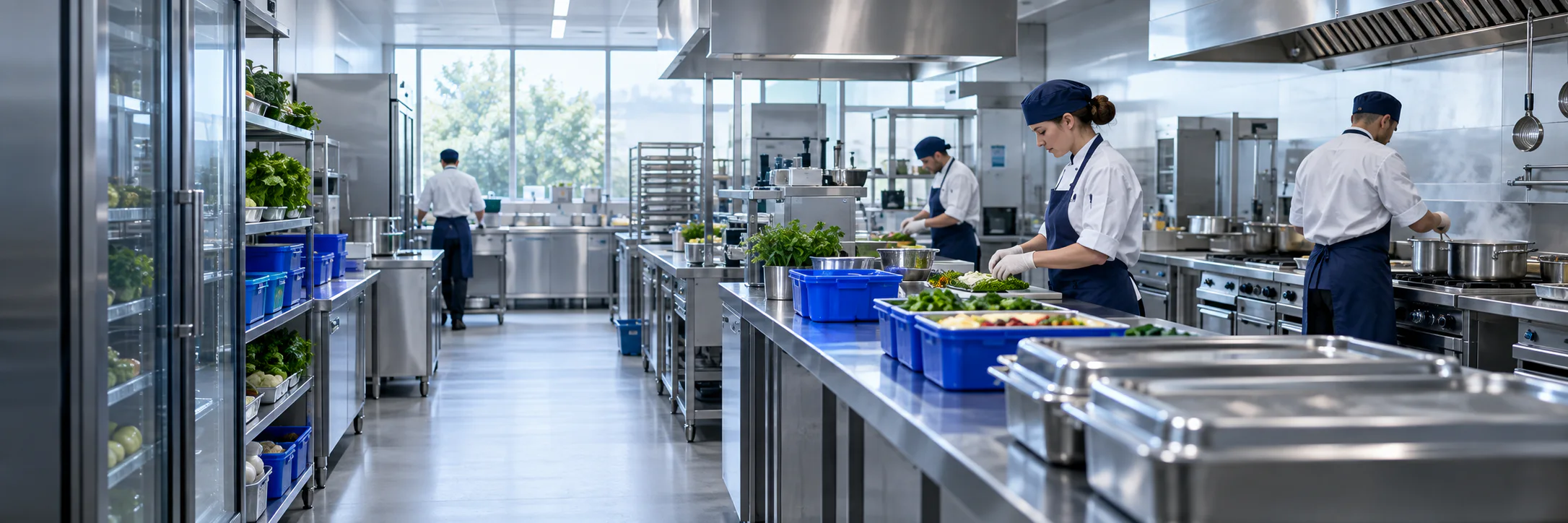
Commercial kitchens combine volume, speed and concurrent activities. The assessment follows ingredients and responsibilities from intake through storage, preparation, holding and service.
What we examine
We observe how stages are organised and where activities intersect.
We review the criteria used, identification and relevant records.
We follow practices, responsibilities and communication defined by the company system.
We connect procedures with real pace, training and team records.
Approach
We confirm activities, products, sites and included criteria.
We observe work, speak with process owners and review an evidence sample.
We explain findings, assessment limits and follow-up points.
Outcome
The assessment adapts to kitchen and service type. It is not health authorisation, an official inspection or certification.
FAQ
No. Sites, products and processes are included only after scope confirmation.
The list follows criteria definition. We request only information relevant to the agreed assessment.
Timing and deliverables depend on complexity, flow count and scope; the quotation follows the initial conversation.